


What are pressed steel grating shelves for pallet racking?
Pressed steel grating shelves are metal panels manufactured by pressing steel components together to form a close-mesh surface. Designed for pallet racking, they create a load-bearing platform between the beams at each storage level. Compared with conventional welded wire mesh decking, pressed steel grating is particularly suitable for loads with irregular or unpredictable footprints, such as bins, moulds, coils and other materials that do not rest on a uniform, clearly defined base.
The panel rests on the beams at the relevant storage level, providing a continuous load-bearing surface between the racking supports. It can be installed as an accessory without necessarily requiring modifications to the main structural components. Before installation, its compatibility with the existing racking must be verified, taking into account the panel dimensions, beam spacing and specifications, support arrangement, required load capacity and the panel’s own weight.
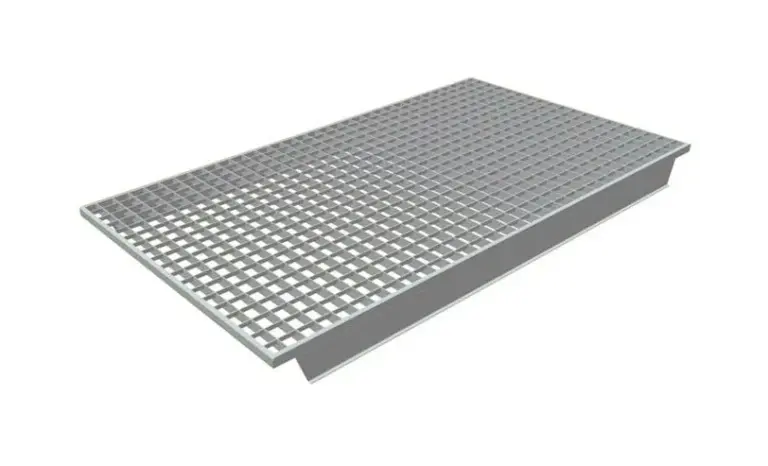
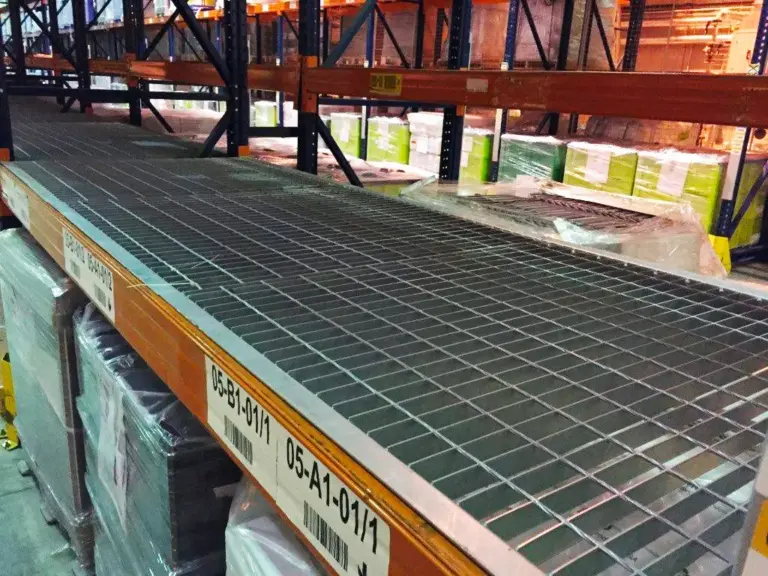
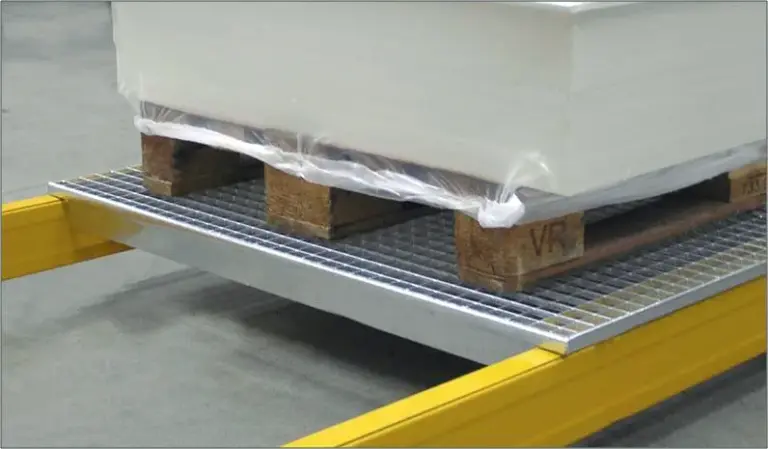
Welded wire mesh decking and pressed steel grating shelves
Grated decking for pallet racking is available in different designs, depending on the manufacturing process. In welded wire mesh decking, the cross wires are welded to the load-bearing wires at each intersection. Pressed steel grating, by contrast, is manufactured by inserting the cross bars into slots in the load-bearing bars and securing them through mechanical pressing, without welding.
The two types of grating differ in their construction and are available with different mesh sizes, bar profiles and load capacities. The most suitable option depends on the load characteristics, the clear span between the beams and the required load-bearing capacity of the decking.
The most suitable option should be selected based on the racking configuration and intended application, ensuring that the decking is compatible with the existing system.
Load capacity and dimensions of pressed steel grating shelves: factors influencing panel selection
The load capacity of grating shelves depends on several factors, including mesh size, the cross-sectional dimensions and arrangement of the load-bearing bars, the panel design and the span between the supporting beams. The dimensions and load capacity must therefore be verified against the technical data for the specific panel and the configuration of the racking on which it will be installed. Generic load ratings should not be applied without checking that they are suitable for the actual installation.
The shelves are available in a range of sizes and configurations to suit the beam spacing of pallet racking, provided compatibility with the existing structure is verified.
Operational benefits of pressed steel grating shelves
Pressed steel grating shelves can offer several benefits in the day-to-day operation of racking systems:
- They provide a continuous support surface across the beams, allowing storage of load units that cannot be supported directly by the beams themselves.
- They help prevent small items or parts of a load from falling through the shelf, depending on the mesh size and the nature of the goods being stored.
- They maintain good visibility and allow air and water to pass through, making them particularly useful in storage bays equipped with sprinkler fire suppression systems.
Suitable load types for pressed steel grating shelves
Pressed steel grating shelves are suitable for applications where the shape, dimensions or support requirements of the load units make it difficult to place them directly on the rack beams. Common applications include:
- Metal bins and baskets containing parts, small components or hardware.
- Moulds, coils and semi-finished products with shapes or dimensions that require a larger support surface.
- Non-palletised loads or loads with uneven bases, provided the shelf configuration and load capacity are suitable for the application.
Sprinkler system compatibility of pressed steel grating shelves
Unlike solid shelf panels, pressed steel grating allows air and water to pass through the storage levels, reducing the obstruction caused by solid surfaces. This can be particularly beneficial in warehouses equipped with sprinkler systems, as it helps water flow more freely between racking levels.
However, the use of pressed steel grating shelves does not, in itself, ensure compatibility between the racking system and the fire protection system. Compatibility must be assessed in the context of the overall fire protection design, taking into account shelf configuration, load arrangement, storage height and sprinkler head positioning. The suitability of the shelves and their installation must therefore be verified against the specific sprinkler system and the applicable design requirements.
Custom design of pressed steel grating shelves
We assess the existing racking system and its intended application to identify the most suitable solution. This involves checking beam spacing and specifications, load type and distribution, required load capacity, and support conditions to ensure the selected pressed steel grating shelves meet the requirements of the existing configuration.
FAQ
Wire mesh decking and pressed steel grating shelves have different construction features and are available in various mesh sizes and configurations. Pressed steel grating shelves are particularly suitable for loads with uneven bases or applications requiring a wider support surface across the beams, such as metal bins, moulds and other items with irregular shapes.
The main difference lies in how the components are assembled. In welded steel grating, the crossbars are welded to the load-bearing bars at their intersections. In pressed steel grating, the crossbars are inserted into slots in the load-bearing bars and secured mechanically by pressing. The choice between the two depends on the load characteristics, the span between the rack beams and the required shelf performance.
The open structure of pressed steel grating allows sprinkler water to pass through the storage levels more freely than solid panels. However, compatibility with the sprinkler system must be verified as part of the warehouse fire protection design, taking into account the storage layout and sprinkler head positions.
The panel is typically placed on the beams at the required storage level and can be secured using dedicated clips or support systems designed to keep it in position.