


Safety fencing around machinery to protect warehouse personnel
Perimeter safety fencing creates a physical barrier to separate warehouse areas, isolate machinery, and protect goods and materials from unauthorised access. It typically consists of square-mesh wire panels reinforced with horizontal ribs, or solid sheet-metal panels where greater visual privacy is required within the enclosed area. The panels are connected by vertical posts and are available in different heights to suit the required level of protection.
In industrial warehouses, perimeter safety fencing is typically used for three main purposes: defining warehouse aisles and work areas accessible to personnel; enclosing automated systems and machinery with moving parts; and securing storage areas containing hazardous materials or high-value goods. The fencing configuration, including panels, posts and access points, should be determined based on the facility layout and the risk assessment for each area.
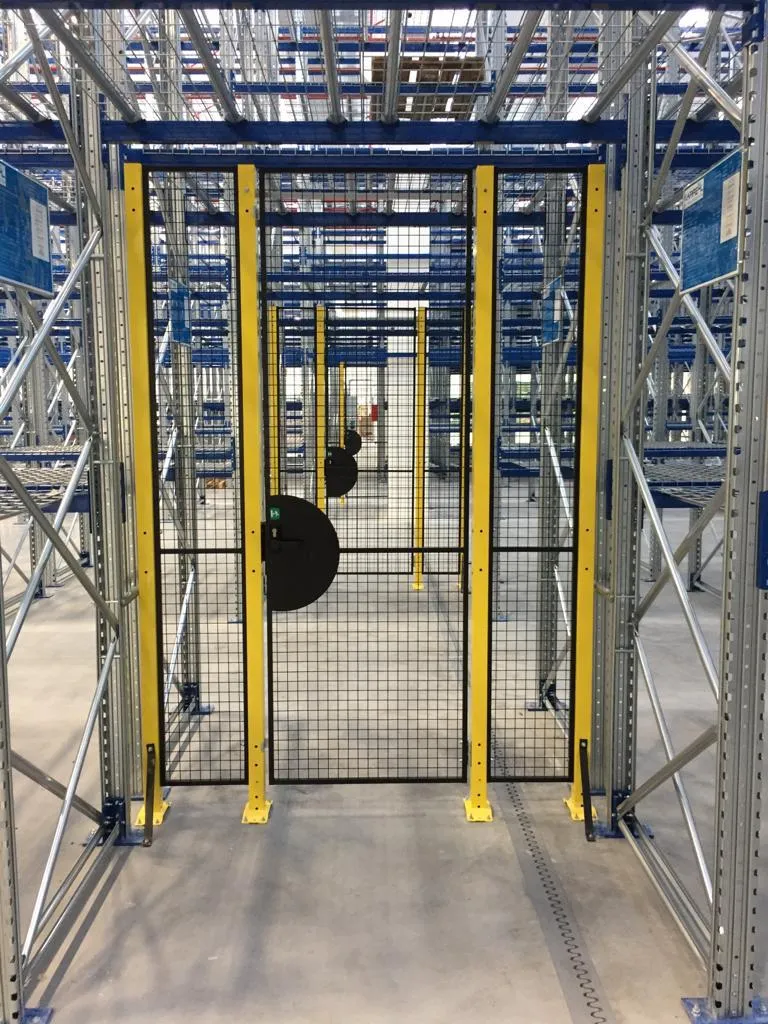
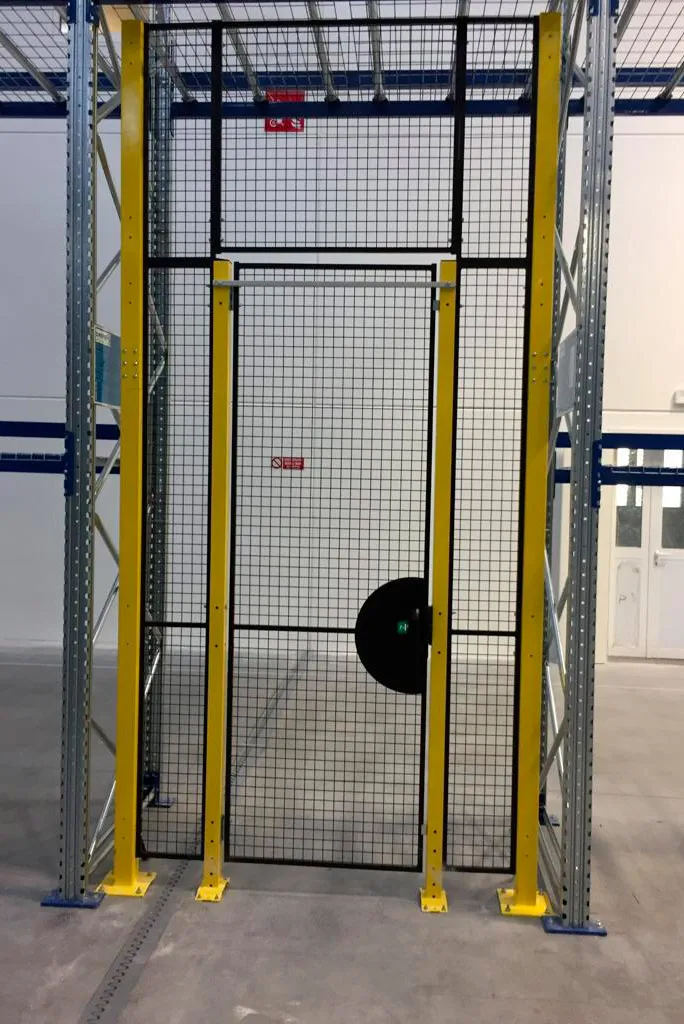
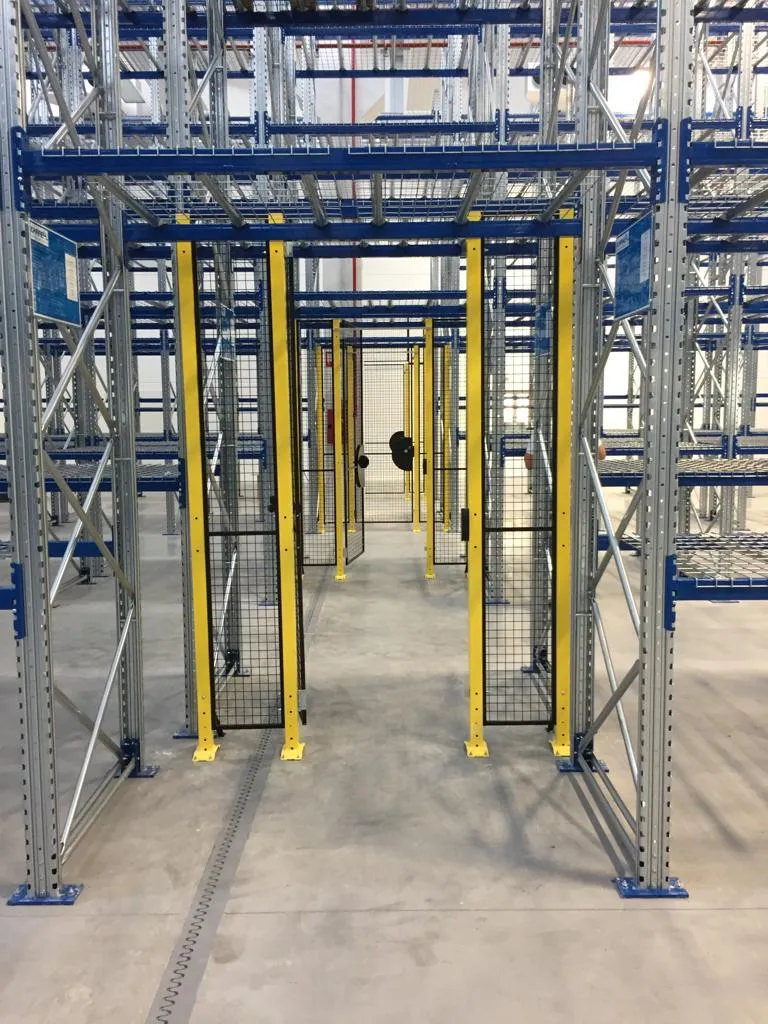
When should perimeter safety fencing be installed in a warehouse?
Perimeter safety fencing can be installed wherever a physical boundary is needed to restrict access to areas that pose risks to personnel. It is particularly suitable, for example, around automated systems and material handling lines, where the separation between work areas and hazardous zones must be clearly defined.
Perimeter safety fencing can also be used to separate specific operational areas from normal personnel traffic, organising warehouse space according to the activities carried out and the risks involved. The fencing configuration, its distance from the area to be protected and the location of any access points should be assessed in relation to the characteristics of the installation and the risk assessment.
It therefore provides a physical barrier to prevent or restrict unauthorised access to protected areas. It forms part of the site’s overall safety arrangements and can be integrated with doors, access control systems, signage and other safety measures adopted by the company.
Types of perimeter safety fencing for machinery
Safety fencing around machinery is typically made from wire-mesh panels or solid sheet-metal panels, depending on the area to be protected and the specific risks involved. Mesh panels allow visibility into the enclosed area, whereas solid panels provide greater visual screening. The system is assembled from modular panels in different sizes, combined to achieve the required height and length for the area to be enclosed.
The fencing system can be fitted with dedicated access points, sized and configured to suit operational requirements. Options include single- and double-leaf hinged doors, as well as sliding doors, which are particularly suitable where space constraints make sliding access more practical than a hinged opening.
The doors can be fitted with various locking systems and, where required by the safety function of the guard, with interlocking devices connected to the machine’s protective system. The appropriate configuration depends on the layout of the area, access requirements and the risks involved, and should be determined based on the characteristics of the installation and the findings of the relevant risk assessment.
Benefits of perimeter safety fencing
Unlike temporary barriers or floor markings alone, modular safety fencing provides a permanent physical separation between protected areas and spaces accessible to operators. It enables controlled access to enclosed areas and can be integrated with doors, interlocking devices and access control systems, depending on the installation design and the findings of the risk assessment. The main benefits include:
- Physical separation between accessible areas and hazardous zones
- Clearer demarcation of routes and access points
- Option to use panels providing visual screening where required
- Modular design that can be extended or reconfigured to suit layout requirements
Custom design of perimeter safety fencing
Every warehouse has its own layout, operational flows and operating conditions. The perimeter safety fencing must therefore be designed to suit the specific environment. By analysing the available information, we assess the area to be enclosed, the risks involved, access requirements and the characteristics of the installation to determine the most suitable solution for your needs.
FAQ
The most suitable solution depends on the area to be enclosed, the risks involved, the installation layout and the required access arrangements. The assessment considers factors such as panel type and dimensions, the number and location of access points, door specifications and locking systems to ensure the configuration meets the needs of the operating environment.
There is no general requirement to install perimeter safety fencing around all machinery. The need for physical guarding depends on the risks involved, the characteristics of the installation and the protective measures identified in the risk assessment. Where access to a hazardous area must be prevented or restricted, perimeter safety fencing may be one of the available protective solutions.
Yes. The position of the safety fence relative to the hazardous area must be determined to prevent personnel from reaching the hazard through or around the guard, in accordance with the guard configuration and the criteria set out in UNI EN ISO 13857. The required separation distance depends on factors such as the size of the openings, the height of the guard and the location of the hazardous area.
Yes. Modular fencing systems can be adapted to accommodate changes to the warehouse layout or new operational requirements. Depending on the system installed, panels, access points and other components can be added or reconfigured, subject to checks confirming their compatibility with the existing structure and the safety requirements of the area.