

What is an automated miniload warehouse?
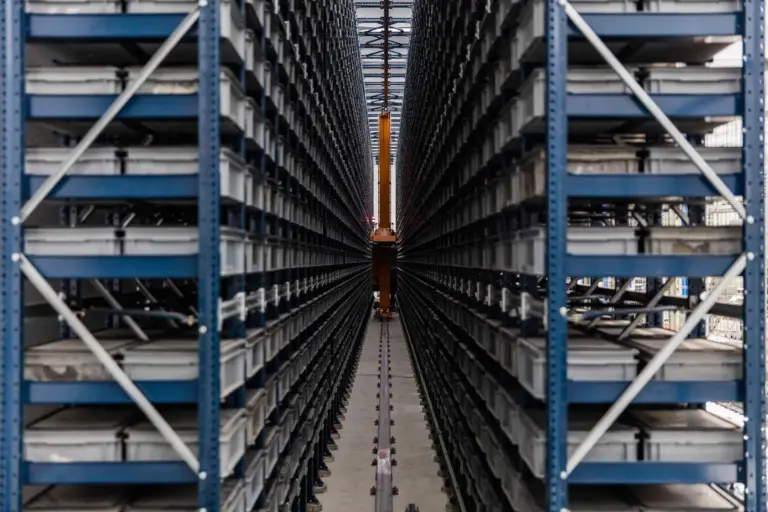
A miniload system is an automated storage and retrieval solution designed to handle totes, cartons and trays weighing up to 50 kg, with storage heights that can exceed 20 metres. It combines racking, stacker cranes or shuttles, conveyors and warehouse management software within a single system, replacing manual handling with a fully automated storage and retrieval process.
Based on the “goods-to-person” principle, a miniload system automatically delivers load units to the operator’s workstation, streamlining picking operations while reducing handling times and errors. We design and implement miniload systems tailored to the specific requirements of each warehouse, with seamless integration into the WMS and other existing information systems. The result is a more efficient and automated approach to storage and picking, aligned with the warehouse’s operational needs.
How miniload systems work and their applications
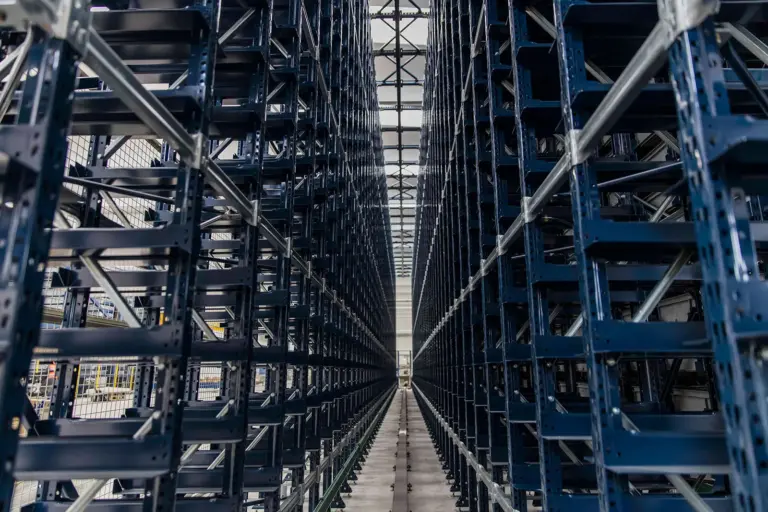
A miniload system is an Automated Storage and Retrieval System (AS/RS) designed for high-density storage and retrieval of small load units, including Eurobox and KLT totes, cartons and trays weighing up to 50 kg each. Unlike conventional storage systems, it automates the entire storage and retrieval cycle through a stacker crane or shuttle that travels along dedicated aisles, handling load units with consistent speed and precision.
The system uses the full height of the building rather than relying primarily on floor area, allowing for high storage density even where available floor space is limited and leaving more room for other warehouse operations. The number of storage locations can be configured according to the size of the installation, the type and dimensions of the load units, and the customer’s operational requirements. Storage and retrieval cycles can also be tailored to the warehouse’s material flows and throughput needs.
Miniload systems are well suited to operations with a high number of SKUs and frequent picking activity, such as e-commerce, pharmaceuticals, electronics, automotive and assembly areas where materials need to be supplied continuously. In these environments, automation shortens access times, provides real-time inventory visibility and enables orders to be processed quickly and reliably.
Analysis of material flows and miniload system design
We design each miniload system around the warehouse’s actual material flows, considering factors such as load unit type and weight, the number of SKUs, peak picking demand and available floor space. Based on this analysis, we determine the racking configuration, the number of aisles and stacker cranes required, and the most appropriate control strategy for the customer’s operating cycle.
A key part of our approach is seamless integration with the warehouse management software already in use, without requiring the existing WMS to be replaced. This helps shorten implementation times and minimise the disruption and risks associated with introducing a new automated system into daily warehouse operations. We manage the entire project, from initial analysis and system design through to installation and commissioning, ensuring compliance with the Machinery Directive and the safety requirements applicable to industrial automation systems.
Miniload Technical Specifications
- Automated handling of totes, cartons and trays weighing up to 50 kg
- Storage heights exceeding 20 metres, with maximum storage density
- High-speed stacker crane or shuttle for rapid storage and retrieval cycles
- Direct integration with the existing WMS or warehouse management software
- Goods-to-person operation: the goods are brought to the operator, rather than the operator going to the goods
The benefits of a miniload storage system
Automating storage and retrieval delivers measurable benefits across warehouse operations:
- Always up-to-date and fully traceable inventory
- Higher operational efficiency through consistent storage and retrieval cycles
- Greater order fulfilment capacity, even during peak demand
- Fewer errors associated with manual material handling
- Reduced labour costs for material handling
- Better use of available space by making full use of vertical height
Miniload: the tailored solution for your warehouse
A miniload system is an ideal solution for companies managing a large number of SKUs that require fast picking and a high degree of accuracy. We design and implement tailored miniload systems, from material flow analysis through to installation, integrating racking, stacker cranes, conveyors and warehouse management software into a single solution that can adapt and scale as warehouse requirements evolve.
FAQ
Pallet racking is designed for heavy palletised load units, whereas miniload systems handle totes, cartons and trays weighing up to 50 kg, using narrower aisles and enabling significantly faster storage and retrieval cycles. A miniload system is particularly well suited to operations with a large number of SKUs and high picking frequency.
Yes. The miniload system can be integrated with the warehouse management software already in use, without requiring the existing system to be replaced. It interfaces with the WMS or ERP at the management level, simplifying implementation and reducing commissioning times.
The timeframe for implementing a miniload system depends on its configuration, including the number of aisles, storage height, the type of stacker crane or shuttle, and the level of integration required with the existing infrastructure. During the initial flow analysis, we work with the customer to establish a realistic project schedule covering all stages, from system design through to commissioning.
Miniload systems are widely used in e-commerce, pharmaceutical, electronics and automotive applications, where a high number of SKUs and continuous material supply to picking, assembly or packaging lines are key operational requirements.