


From the formula to industry benchmarks, learn how to interpret and improve your inventory turnover ratio.
The inventory turnover ratio is a key performance indicator (KPI) for assessing a company’s financial and operational performance. It measures how efficiently inventory is managed and provides valuable insights into demand patterns and the effectiveness of purchasing decisions.
This metric measures how many times a company sells and replenishes its inventory over a given period, typically one year.
How exactly is inventory turnover calculated, and more importantly, how can this metric help reduce costs and streamline warehouse operations?
What is the inventory turnover ratio and why is it important?
A full warehouse is not necessarily a sign of financial strength. On the contrary, goods sitting on shelves for too long tie up capital and increase storage costs.
The inventory turnover ratio helps you monitor how long goods remain in storage, showing how frequently stock of a given product is depleted and how often replenishment orders need to be scheduled.
How to calculate the inventory turnover ratio
A common mistake is to calculate inventory turnover using sales revenue. For an accurate measure that is not skewed by sales mark-ups, the calculation should instead be based on the cost of goods sold (COGS).
The correct formula is:
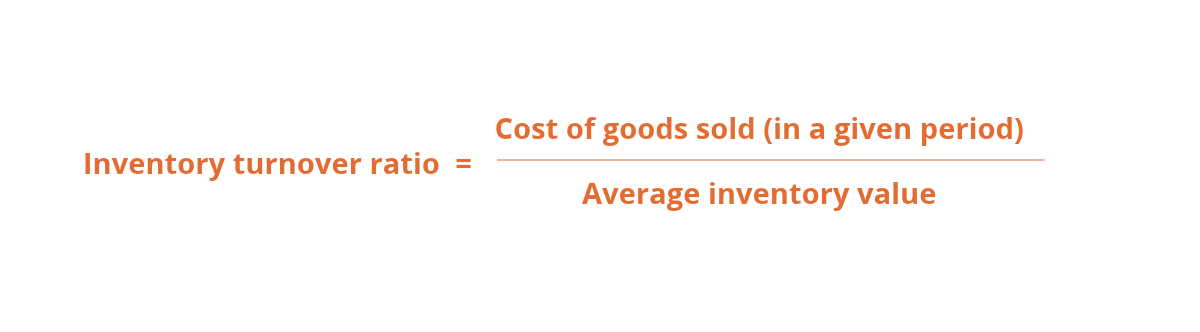
Inventory turnover ratio = Cost of goods sold (COGS) over a given period / Average inventory value over the same period
To calculate average inventory, simply add the inventory value at the beginning of the period to its value at the end, then divide the total by two.
How to interpret inventory turnover ratios across different industries
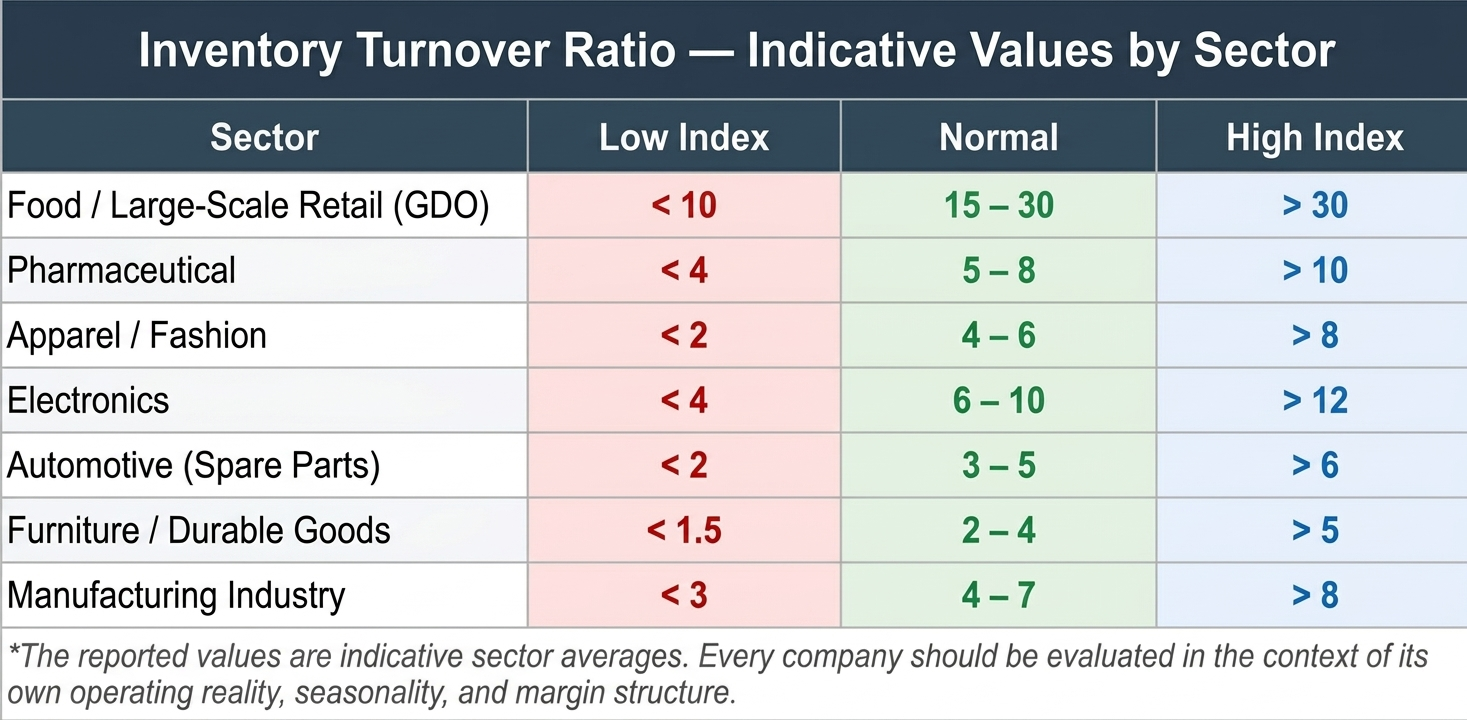
Terms such as “high turnover” and “low turnover” are meaningless without a benchmark. There is no universally ideal ratio, as the appropriate benchmark varies significantly depending on the industry, profit margins and the nature of the products.
As a general guideline, an inventory turnover ratio below 3 may indicate a potential issue, regardless of the industry. A ratio above 6 generally suggests efficient inventory management in most manufacturing and distribution businesses.
The following benchmarks offer a general guide to inventory turnover across major industries. Based on market averages, they should be treated as indicative rather than definitive, as each business’s performance depends on its operating model, seasonal demand and profit margins.
From inventory turnover ratio to average days in inventory
For a more tangible measure, divide 365 by the inventory turnover ratio to calculate Days Inventory Outstanding (DIO), which indicates the average number of days inventory remains in stock.

DIO = 365 / Inventory turnover ratio
For example, an inventory turnover ratio of 6 means stock remains in inventory for an average of around 60 days. A ratio of 2, by contrast, means around 180 days, tying up capital for almost six months.
Optimise your logistics through data-driven decisions
Analysing how inventory levels change over time provides valuable insights into the entire logistics process. Understanding inventory turnover helps businesses move from reactive stock management to a more proactive, data-driven approach.
Here’s how to turn this KPI into actionable improvements:
- Warehouse layout optimisation (ABC analysis): ABC analysis groups products by economic value, following the Pareto principle (80/20 rule). Combining these categories with inventory turnover helps refine warehouse layout decisions. High-value items with frequent stock movements should be stored in easily accessible locations near loading and unloading bays, reducing travel distances and picking times.
- Procurement planning: Helps align purchasing decisions with actual demand patterns, reducing reliance on intuition alone.
- Strategic resource allocation: Helps prioritise the use of equipment, such as forklifts, and allocate staff more effectively.
- Improved inventory accuracy: When combined with value-based classification, inventory turnover helps determine the optimal frequency of cycle counts, reducing stock discrepancies.
Assess the health of your logistics operations
Inventory turnover is an important KPI, but it is only one part of the picture when assessing the overall efficiency of your logistics operations. A comprehensive view of warehouse performance is essential to streamline material flows, eliminate bottlenecks and reduce storage costs.
You know your inventory turnover ratio, but do you know which areas to focus on to improve it?
Contact us today to speak with one of our consultants. We’ll assess your current operations and show you how to make your logistics more measurable and profitable. Our team of experts will analyse your warehouse flows and recommend a tailored solution that meets your operational and safety requirements.